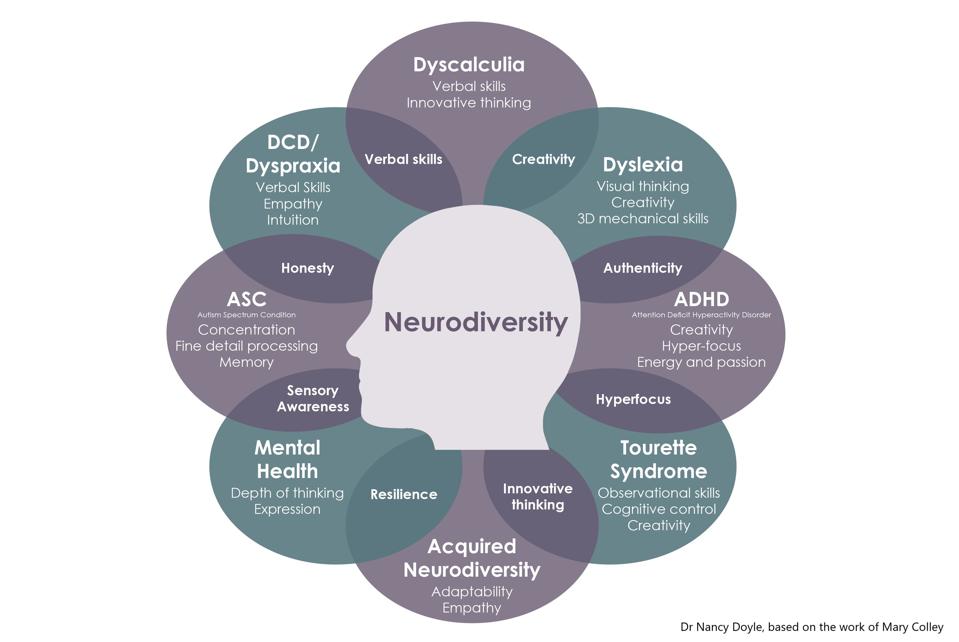
I want to look at some of the strengths and advantages of the being autistic. I say autistic rather than neurodiverse because that is my lived experience. The term neurodiverse encompasses a wide range of abilities that are different to neurotypical ways of thinking.
In the paper by Livingston et al (2019), a study of the compensatory strategies by autistic individuals were explored.
The aim was to improve diagnoses of those individuals who did not necessarily display overt traditional autistic spectrum behaviours but still experienced cognitive difficulties. The social compensatory behaviours were found to mask these apparent difficulties. Autism is diagnosed by a set of behaviours that demonstrate social cognitive functioning (American Psychiatric Association, 2013) and once diagnosed, support can be put in place to enable a degree of access and positive experiences within a social construct. As mentioned, Livingston et al’s paper hoped to enable a recognition of these compensatory behaviours with the aim of providing a mechanism of support particularly for often late diagnosed individuals, and significantly females.
Although the study was published in the Lancet, a recognised medical Journal, there was an interesting challenge to the conventional system of diagnosing autism because it was not based on the medical model and was a qualitative study of interviews and anecdotes. This is certainly a person-centred approach that recognises experiences rather than statistics. When research is carried out, it depends so much on the sample researched so how can it be applied to a wider society? Although I applaud the premise which at least raises the camouflage issue to diagnosis, the impact on the process via the medical model may not be substantial. Yes, more research is needed certainly to address this aspect of coping mechanisms as the medical model does not account, I believe, for subjective and unquantifiable data.
In their paper they also note that “even for people with the diagnosis and neurotypical appearance due to compensation might result in support needs being underestimated in Educational and workplace settings.” In schools the child creating a disturbance is highlighted for intervention strategies, I believe and this is why. The quiet child in the corner who is deemed a shy introvert who does not disrupt a class turns her frustration and inability to process what is being said inwards rather that outwards.
The National Institute for Health and Care Excellence (NICE, 2020) described many behavioural aspects to autism within a classroom setting to assist a SENCO (Special Educational Needs Co-ordinator) who is a teacher within school with some additional training relating to all learning difficulties (National Autistic Society, 2010). NICE (2020) lists many behavioural aspects that could be disruptive in class, including “Extremes of emotional reactivity that are excessive for the circumstances,” “Responses that seem rude or inappropriate”, and “their approach may seem inappropriately aggressive or disruptive.” There is a feminist issue with diagnosing females as autistic (Bartlett, 2021) and thus being able to be understood and supported in educational settings has to be recognised. Therefore, in further and higher education opportunities have be made accessible and inclusive within this context.
In a recent blog post called “Neurodiversity? Let’s start to highlight the positives” (MacKay, 2019) there was cited a great quote by the Head of Model and Credit Risk Governance, Metrobank, Eleanor Demuth, who is autistic. She said “It’s like having a superpower and a missing leg” which is a fantastic example of what it feels like to have autism and a different way way of thinking. The strength of being able to think laterally, being able to focus on details and be loyal, honest and have a sense of justice means that we can bring so much to a workplace or educational environment.
So what can be done by organisations to facilitate optimum levels of functioning for neurodiverse people?
McKay (2019) says that ‘clear and unambiguous instructions’ are vital as well as ‘prior warning of changes in routine reduce anxiety and raises performance’. By enabling that individual to be themselves and be provided with a means of self-efficacy and resolution to potential problems, an organisation will have gained a committed and loyal employee, or a student who is able to reach their potential and contribute to the development of an inclusive institution.
One of the ways in which autistic individuals may excel is in their visual skills, where they are able to see a small part of the whole, focusing on details and patterns. This means that to enable comprehension of information a visual presentation, such as a diagram or a map could be more effective, as opposed to a list or or several paragraphs. Flow diagrams and illustrated information contextualise processes, order, as well as enhancing meaning. Organisation and planning can be challenging for autistic individuals which is why tapping into their visual skills can be an inclusive opportunity.
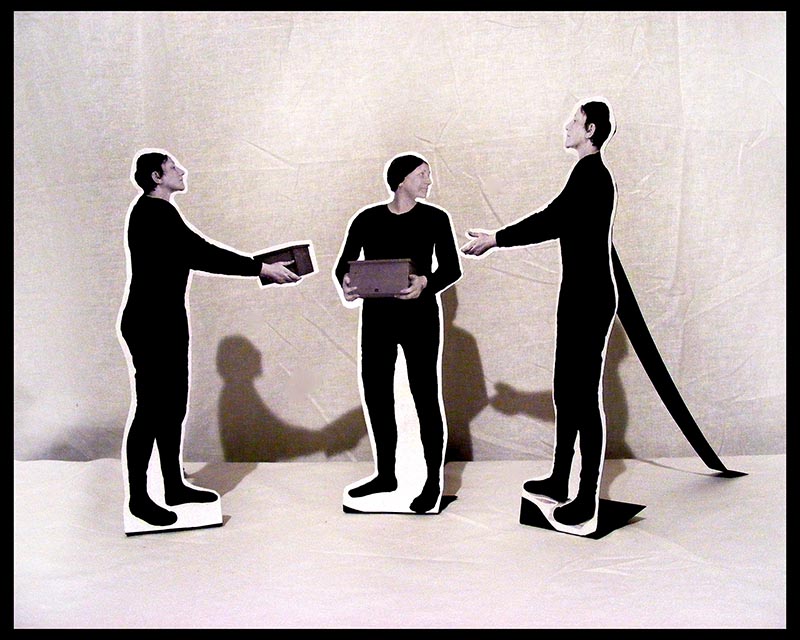
As a neurodiverse creative with baggage and past trauma of school and late diagnosis, the journey forward must continue, if only that change happens to enable more female autistic artists to take a valued position in the mainstream educational establishments. I’ve decided to remove the word ‘support’ in favour of ‘understanding’ when asked what I need. I believe the word support remains an abstract concept where things are delivered, like crutches to create a recovery and wellness package. I’m not necessarily a part in that as I don’t know what lies ahead for me.
What I need is understanding.
To be ‘understood’ is very person-centred (Noel, 2018) and recognises individuality as well as life experiences that may have been difficult. It’s being heard and valued, and on an equal footing in a primarily neurotypical environment.
That is the way forward.
References
American Psychiatric Association (2013) Diagnostic and statistical manual of mental disorders: DSM-5. 5th ed. Washington, D.C: American Psychiatric Association.
Bartlett, E. (2021) ‘Girls on the spectrum are still very much in the shadows’ : Autism and feminism, The Gryphon. Available at: https://www.thegryphon.co.uk/2021/03/16/girls-on-the-spectrum-are-still-very-much-in-the-shadows-autism-and-feminism/ (Accessed: 9 June 2021).
Doyle, N. (2020) ‘The World Needs Neurodiversity: Unusual Times Call For Unusual Thinking’, 24 March. Available at: https://www.forbes.com/sites/drnancydoyle/2020/03/24/the-world-needs-neurodiversity-unusual-times-call-for-unusual-thinking/?sh=215e34716db2 (Accessed: 22 May 2021).
Livingston, L. A., Shah, P. and Happé, F. (2019) ‘Compensatory strategies below the behavioural surface in autism: a qualitative study’, The Lancet Psychiatry, 6(9), pp. 766–777. doi: 10.1016/S2215-0366(19)30224-X.
MacKay, K. (2019) Neurodiversity? Let’s start to highlight the positives., Sparx. Available at: https://sparx.co.uk/neurodiversity-lets-start-to-highlight-the-positives/ (Accessed: 24 June 2021).
National Autistic Society (2010) extra help at school England. Available at: https://www.autism.org.uk/advice-and-guidance/topics/education/extra-help-at-school/england (Accessed: 9 July 2021).
National Institute for Health and Care Excellence (2020) When to suspect autism in a primary school child | Diagnosis | Autism in children | CKS | NICE. Available at: https://cks.nice.org.uk/topics/autism-in-children/diagnosis/when-to-suspect-autism-in-a-primary-school-child/ (Accessed: 9 July 2021).
Noel, S. (2018) Person–Centered Therapy (Rogerian Therapy). Available at: https://www.goodtherapy.org/learn-about-therapy/types/person-centered (Accessed: 9 July 2021
 Exploration of Life as a Neurodiverse Creative
Neurodiverse Creative, your blog will soon be added to our Actually Autistic Blogs List (https://anautismobserver.wordpress.com/). Please click here (or on the “How do you want your blog listed?” link at the top of that site) to customize your blog’s description on the list (or to decline).
Thank you.
Judy (An Autism Observer)
LikeLiked by 1 person
Thank you for this Judy. Much appreciated.
LikeLiked by 1 person
You’re welcome, and thanks for writing your blog. The list wouldn’t exist without bloggers like you.
I received your form and will respond by email soon.
LikeLike