“Have you heard of autistic burnout?” Asks my lovely neighbour over the fence. Her son is autistic and she has known me for 7 years and her late father was my Lockdown buddy last year.
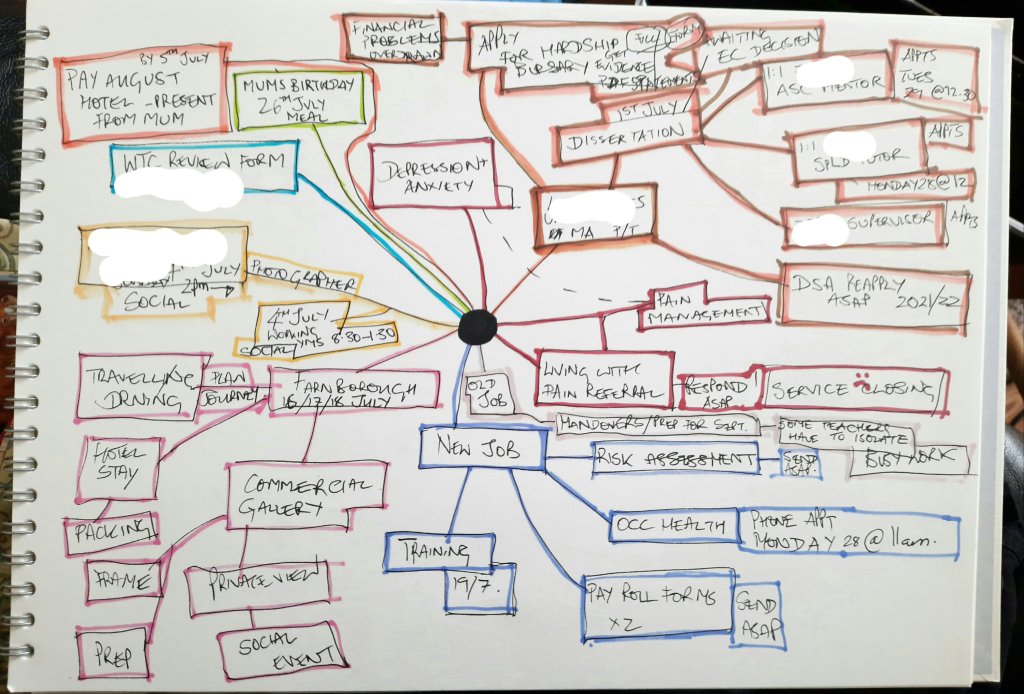
I hadn’t heard of it, no, but after the week I’ve had (and it’s only Wednesday) where I’ve not had time to process a lot of things or recharge my batteries and have several culminating commitments in July…and so on and so on, I look it up tonight. My embarrassing outburst this morning towards an arrogant driver parked in a disabled bay (I have a blue disabled badge and am living with pain every day) meant I burst into tears in overwhelming tension that I wanted to escape from and took all my willpower to not run and never leave the house again. I have spent several moments each day having sobbing episodes in absolute frustration, with the need to escape paramount in my mind.
“‘Autistic burnout’ is the intense physical, mental or emotional exhaustion, often accompanied by a loss of skills, that some adults with autism experience. Many autistic people say it results mainly from the cumulative effect of having to navigate a world that is designed for neurotypical people. Burnout may especially affect autistic adults who have strong cognitive and language abilities and are working or going to school with neurotypical people.” (Deweerdt 2020)
I think deadlines are a double edged sword where on one hand I can focus, but on the other, my adrenal glands become exhausted with the up and coming date approaching.
Creative opportunities present, so I feel I need to accept them to fulfil my own brief for fruition but soon the pace quickens, multiple demands are required and then there’s an emergency in the family and suddenly you’re in a place where there’s no escape.
According to Spectrum News online:
“Burnout is often a consequence of camouflaging, or masking, a strategy in which autistic people mimic neurotypical behavior by using scripts for small talk, forcing themselves to make eye contact or suppressing repetitive behaviors. These strategies can help autistic people in their jobs and relationships but require immense effort.”
Very true. In fact EVERY interaction requires immense effort including texts messages received, emails, WhatsApp, Facebook, Twitter, Instagram, shopping, and the list goes on.
And then there’s creative practice. My island of solace. My focused calm and restoration. Time for me to process my very being. Please leave me alone to go to my island. Removal of oneself is the way to ‘treat’ burnout.
So I must try to not over commit, stand up for what I need and hope people understand and hear my need primarily…. Just so I can eventually start moving again.
References
Deweerdt, S. (2020) ‘Autistic burnout, explained’, Spectrum | Autism Research News, 30 March. Available at: https://www.spectrumnews.org/news/autistic-burnout-explained/ (Accessed: 2 July 2021).
Deweerdt, S. (2020) ‘Autistic burnout, explained’, Spectrum | Autism Research News, 30 March. Available at: https://www.spectrumnews.org/news/autistic-burnout-explained/ (Accessed: 2 July 2021).
Rossi, C. (2021) Autism Spectrum Disorder: Autistic Brains vs Non-Autistic Brains, Psycom.net – Mental Health Treatment Resource Since 1996. Available at: https://www.psycom.net/autism-brain-differences (Accessed: 3 June 2021).
 Exploration of Life as a Neurodiverse Creative