Where I fit in has always been a question without any answers and it’s something that has presented as a need to seek role models, or inspirers to give some, if not all, of my work context.
From the early days of looking at others, mostly in films and television programmes, I sought to find a space where I fitted in as a human being, as a child, an adolescent and as an adult. Therefore, I lived through artificial scenarios that encompassed artificial characters as role models with whom I felt a connection. I became them in ways, adopting phrases and mannerisms, sometimes consciously, often not. Consistently, I looked outwards from family whom I often asked if I was adopted which was my secret belief as a child. I wasn’t. As my Mother often said, I wasn’t because she remembers giving birth to me. I had no other evidence and I did resemble her but I couldn’t connect otherwise.
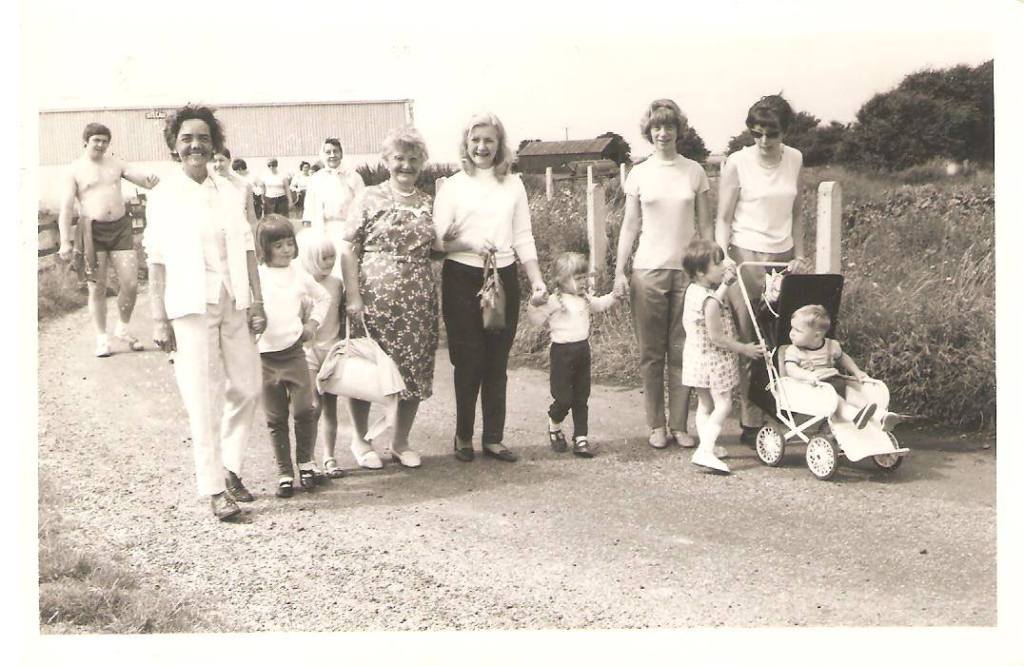
In primary school I became obsessed by westerns. The role models were not female, but male. Then, I didn’t understand why or even question that factor. I couldn’t find any female role models that I could identify with. I then went to an all girls secondary school in Islington from 1977 – 1982 that, looking back, was on the side of Left, politically, and I acknowledge that my new (and real) role models were the amazing female Sociology teachers who were very much feminists and now I would identify as quite androgynous like me.
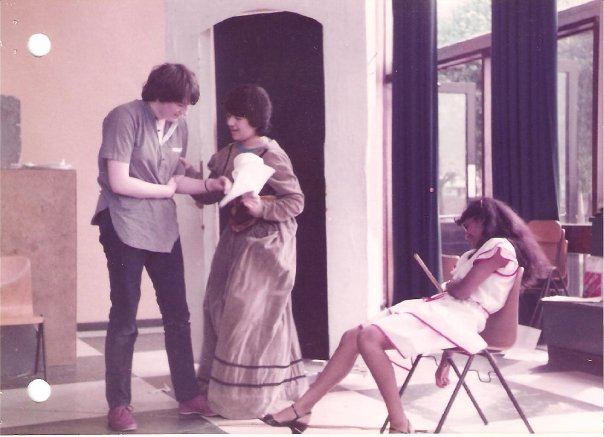
Starcross School introduced me to Women’s Studies and it was innovative in it’s approach to teaching a curriculum around the Women’s Rights Movement, as evidenced below.
“Starcross is a girls’ comprehensive school in Islington, London. All the members of the social sciences department are feminists, and we have worked collaboratively to develop most of the courses we teach. ” (Kirton, 1983).
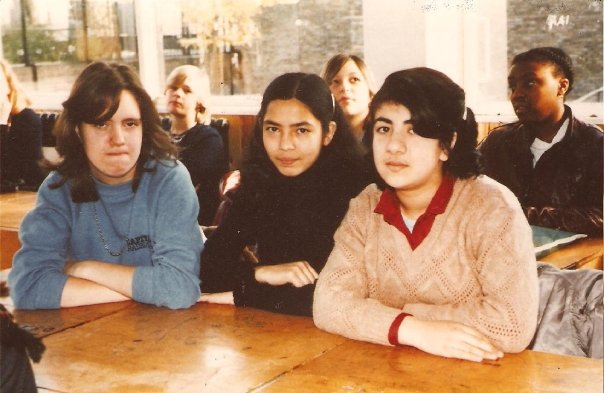
In the careers interview at school, when discussing my possible A level selection, I was crushed by the Careers Officer stating that “there are too many Art Sociologists” when I said I wanted to do A level Sociology and Art. I was already passionate about social justice and feminism. Nothing else was suggested and I was left floundering, regarding my hopes.
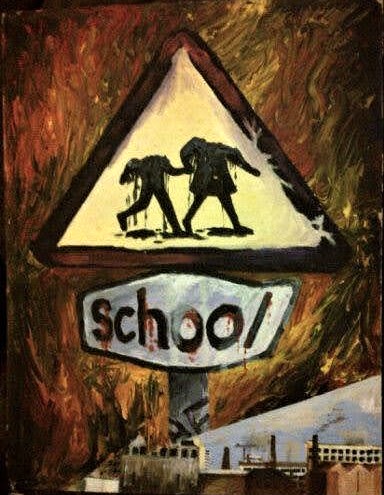
Fate took over anyway due to my Dad’s redundancy and moving house from all that I knew halfway through my first term doing A level Art and General Studies (whatever that was??). Moving to the ‘Posh’ area of Stanmore in Middlesex was quite horrific and I struggled as I was a poor cockney in a rich area with other students who spoke in a very posh way (to me). I was saved by my Art Teacher who described me as ‘sardonic’ which I of course had to look up in the dictionary. “ADJECTIVE characterized by irony, mockery, or derision” (Collins English Dictionary, 2021).
It sort of gave me a way to ‘be’ and I sort of liked that perception as I was quiet, shy and generally introverted. I was definitely an observer, trying fathom what environment I had been dumped in. The camera became a mask to hide behind processing the world in my own time.
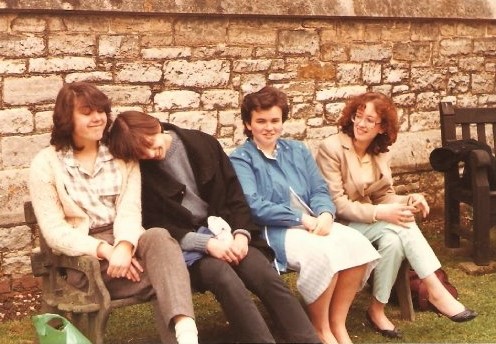
Fast-forward to the present where I decided to approach this part of my analysis influenced by the photographer Jo Spence who approached her work in a way that was autobiographical as well as deconstructing her own context in relation to her family and friends.
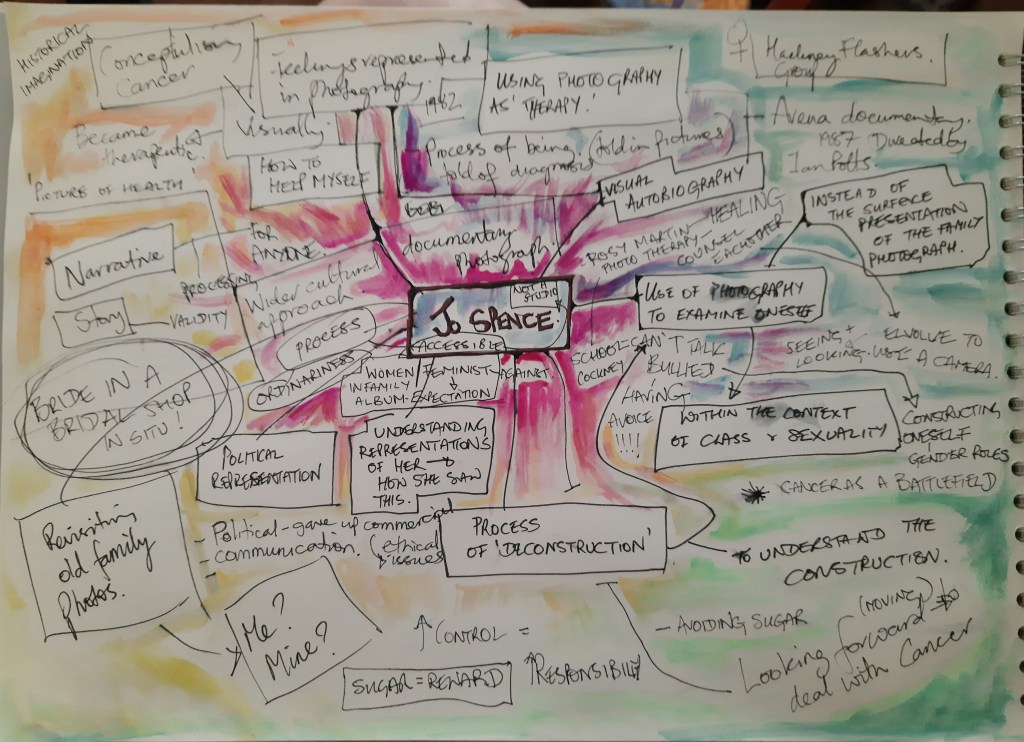
Jo Spence is one person who I felt very akin to as she came into creative photography in her own right with her own work through a journey of ordinariness and a need to socially engage and challenge the status quo from a feminist theoretical perspective. Her context from an experiential journey was documented throughout to process and manage her challenges. Revisiting her childhood, as documented in the Arena programme for the BBC, directed by Ian Potts (Ian Potts, 1987) was based on her autobiographical book ‘Putting Myself in the Picture’ (Spence, 1986) and I was able to gain real insight into processes that would inform my own with more confidence.
References
Collins English Dictionary (2021) Sardonic definition and meaning | Collins English Dictionary. Available at: https://www.collinsdictionary.com/dictionary/english/sardonic (Accessed: 21 July 2021).
Kirton, A. (1983) ‘Teaching a Women’s Rights Course in a Secondary School’, Feminist Review, (15), pp. 81–87. doi: 10.2307/1394794.
Ian Potts (1987) Arena. Jo Spence. ‘Putting Myself in the Picture’. Available at: https://www.youtube.com/watch?v=W-CLuYNVWSs (Accessed: 22 June 2021).
Spence, J. (1986) Putting myself in the picture: a political, personal, and photographic autobiography. London, England: Camden Press.
 Exploration of Life as a Neurodiverse Creative